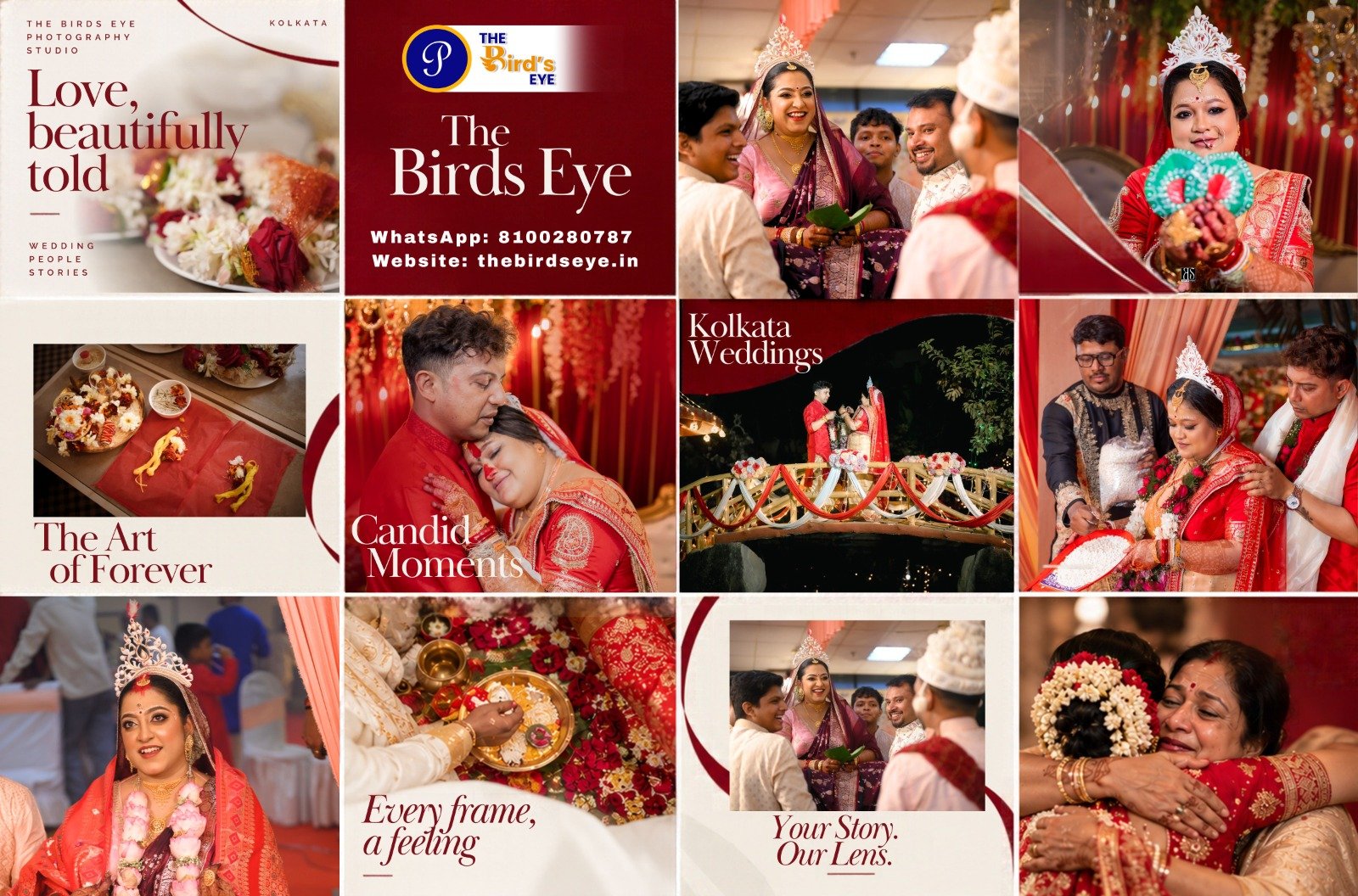
A Bengali Annaprashan ceremony — the baby's first rice, surrounded by family and blessings.
Bengali Annaprashan (First Rice Ceremony) Photography Guide: 12 Must-Have Shots & Tips for Parents
Annaprashan is a sacred and joyful Bengali ceremony that marks a baby's first taste of solid food, usually rice. For families in Kolkata, it is not just a meal; it is a milestone wrapped in blessings, laughter, traditional attire and the warmth of three generations gathered in one room. Photographs from this day become the first chapter of a c hild's visual story, and they deserve the same care as a wedding album.
This guide is written for parents and families planning a Bengali Annaprashan in Kolkata. It explains what the ce remony means, lists the 12 photographs that should never be missed, shares creative photoshoot ideas, and offers pra ctical preparation and photographer-selection tips. Throughout, the phrase Annaprashan photography Kolkata is used naturally, because that is what families actually search for when they begin planning.
Key Takeaways
- Annaprashan is the Bengali rice ceremony celebrating a baby's first solid food, surrounded by family and blessin gs.
- Planning photography before the ceremony protects the moments that cannot be repeated, especially the first rice feeding.
- A balanced mix of traditional posed photographs and candid moments gives the most complete memory of the day.
- The Birds Eye offers dedicated Annaprashan and Mukhe Bhaat photography packages in Kolkata, starting from ₹30,00 0.
- Booking early, sharing the ceremony schedule and preparing the baby's comfort are the three biggest factors in a smooth shoot.
Table of Contents
- What Is Bengali Annaprashan and Why Is It Special?
- 12 Must-Have Annaprashan Photography Shots
- 8 Creative Baby Rice Ceremony Photoshoot Ideas
- How to Prepare Your Baby for an Annaprashan Photoshoot
- Best Time to Capture Annaprashan Photographs
- What Should Parents Discuss with Their Annaprashan Photographer?
- How to Choose the Right Rice Ceremony Photographer in Kolkata
- Annaprashan Photography Checklist for Parents
- Frequently Asked Questions About Annaprashan Photography
- Preserve Your Baby's First Rice Ceremony with The Birds Eye
What Is Bengali Annaprashan and Why Is It Special?
Annaprashan, also called Mukhe Bhaat, is the traditional Bengali ceremony in which a baby is given solid food, us ually rice, for the first time. The word itself comes from Sanskrit: anna meaning food or grain, and pr ashan meaning feeding. In most Bengali families the ceremony is held when the baby is around six months old, al though the exact timing varies by family, health advice and regional custom. Some families also refer to it as the f irst rice ceremony, which is the phrase most parents search for online.
The ceremony is special because it sits at the meeting point of tradition and everyday life. A baby who has only known milk is introduced to the food that sustains Bengali households, and the family gathers to bless that transiti on. Grandparents, maternal and paternal relatives, close friends and neighbours all take part. The baby is dressed i n traditional attire, often with a tiny dhoti or sari, gold ornaments or a small mukut, and the home or venue is dec orated with flowers, banana leaves and traditional props. A maternal uncle, called Mama, often performs the first fe eding, and a gold coin or ring is sometimes placed near the food as a symbol of prosperity.
Because every family follows slightly different customs, it is important to treat Annaprashan as a family celebra tion rather than a fixed ritual. Some families hold it at home, others at a community hall or restaurant banquet. So me include a priest and formal prayers, others keep it intimate. A good photographer adapts to the family's way of c elebrating rather than imposing a standard template.
Photographs matter here more than at most events, because the subject is a baby who will never be this small agai n. The expressions, the tiny hands reaching for rice, the grandparents' tears and the parents' quiet pride are all f leeting. A professional photographer who understands Bengali family ceremonies can capture both the formal ritual an d the emotional undercurrent without interrupting the flow. That is why parents who search for Annaprashan p hotography Kolkata usually want someone experienced with babies and with traditional Bengali gatherings, no t just a general event photographer.
If you are still deciding on coverage, you can look at the studio's dedicated Annaprashan photography packages and the Annaprashan photo gallery to understand the style and scope of work before booking.

Traditional attire, family blessings and the baby's first taste of rice — the heart of Annapr ashan.
12 Must-Have Annaprashan Photography Shots
This section is the most valuable part of the article. These twelve shots cover the baby, the family, the ritual and the setting. For each one, the description explains what to capture, why it matters, how parents can prepare, an d a practical photography tip. Share this list with your photographer before the ceremony.
1. Baby's Traditional Portrait
What to capture: A calm, well-lit portrait of the baby in traditional attire, usually taken befo re guests arrive or during a quiet moment. Include close-ups of the outfit, ornaments, mukut or topor if worn, and t he baby's face.
Why it matters: This is the single image parents frame, print and share with relatives. It freez es the baby at a specific age and in ceremonial dress.
How parents can prepare: Dress the baby early, allow a few minutes of calm, and keep a favourite toy or pacifier nearby to settle them. Avoid scheduling this shot right after a feed or a nap transition.
Photography tip: Use soft natural light from a window, shoot at the baby's eye level, and keep t he background simple so the outfit stands out.
2. Baby with Parents
What to capture: The baby with mother, then with father, then with both parents together. Includ e both posed portraits and candid moments where the parents are holding, soothing or playing with the baby.
Why it matters: These are the images the child will grow up seeing. They show the parents' pride and tenderness at the milestone.
How parents can prepare: Decide in advance who holds the baby first, and keep a small cloth hand y for any drool or food. Parents should wear their ceremonial outfits fully before these shots.
Photography tip: Capture the parents' faces as well as the baby's, and use a slightly wider fram e so hands and gestures are visible.
3. Baby with Grandparents
What to capture: The baby with maternal grandparents, paternal grandparents, and both sets toget her if possible. Include moments where grandparents are blessing, holding or playing with the baby.
Why it matters: Grandparents are often the emotional centre of an Annaprashan. These photographs become precious family heirlooms, especially as generations pass.
How parents can prepare: Identify which grandparents will be present and whether any have mobili ty or health considerations, so the photographer can plan seating and lighting.
Photography tip: Seat grandparents comfortably, avoid harsh overhead light, and capture both for mal portraits and candid interactions.
4. The First Rice Feeding Moment
What to capture: The exact moment when rice is offered to the baby, usually by the maternal uncl e or a senior family member. Capture hands, the bowl or plate, the baby's face and the surrounding family.
Why it matters: This is the defining moment of the entire ceremony. Missing it means missing the reason the event exists.
How parents can prepare: Tell the photographer in advance who will perform the feeding, where it will happen and roughly when, so they can position themselves without blocking family or the priest.
Photography tip: Use a fast shutter speed, shoot from a low angle to include both the feeder and the baby's face, and avoid flash that may startle the baby.
5. Baby's Reaction to the First Bite
What to capture: The baby's expression immediately after tasting rice for the first time: surpri se, curiosity, delight, confusion or even a grimace. Capture a short burst of frames.
Why it matters: These candid reactions are the most shared and most loved images from the day. T hey show personality rather than posing.
How parents can prepare: Do not coach the baby to smile. Let the moment unfold naturally and kee p the area around the baby clear so the photographer has space.
Photography tip: Use continuous shooting mode, focus on the eyes, and be ready before the spoon reaches the baby's mouth.
6. Family Blessing Moments
What to capture: Relatives and elders blessing the baby, touching the baby's head, offering gift s, or whispering prayers. Capture both wide shots of the gathering and close-ups of hands and faces.
Why it matters: Blessings are the spiritual heart of Annaprashan. These images show the communit y of love around the child.
How parents can prepare: Ask the photographer to stay unobtrusive during blessings so elders fee l comfortable. Identify any senior relatives who should not be missed.
Photography tip: Work with available light and a quiet shutter mode, and focus on hands and expr essions rather than full bodies.
7. Traditional Ritual Details
What to capture: Close-up details of the ceremony setup: the rice bowl, banana leaves, flowers, gold coin or ring, traditional plate, lamps, and the baby's ornaments and clothing.
Why it matters: Detail shots give the album texture and context. They are also the images that m ake a gallery feel editorial rather than purely documentary.
How parents can prepare: Keep the ritual items together in one place before the ceremony so they can be photographed before use, and avoid moving them around unnecessarily.
Photography tip: Use a shallow depth of field, shoot from above and from the side, and include a human hand or the baby in one or two frames for scale.
8. Baby with Maternal and Paternal Relatives
What to capture: Group photographs of the baby with maternal relatives, then with paternal relat ives, and any sub-groups such as cousins or aunts. Capture both formal group portraits and candid clusters.
Why it matters: Annaprashan is a family reunion as much as a ceremony. These groups show the wid er circle that welcomed the child.
How parents can prepare: Prepare a short list of the most important groups in advance, and assig n a family member to help gather people quickly.
Photography tip: Photograph groups in good light, keep the baby at the centre, and take several frames to catch everyone with open eyes.
9. Complete Family Portrait
What to capture: One formal portrait of the entire family together: parents, baby, grandparents and close relatives. Also capture smaller nuclear-family portraits.
Why it matters: This is the photograph that ends up on the wall. It represents the family at a s pecific moment in time.
How parents can prepare: Schedule this after the main ceremony when everyone is still present an d dressed, and choose a location with enough space and even light.
Photography tip: Use a tripod or steady surface, arrange people by height, and take multiple fra mes to ensure everyone looks their best.
10. Baby's Candid Expressions
What to capture: Unposed moments of the baby throughout the day: yawning, laughing, staring at l ights, playing with a toy, being passed between relatives, or sleeping. Capture expressions before, during and after the ceremony.
Why it matters: Posed portraits show how the baby looked; candid images show how the baby felt. Both are needed for a complete story.
How parents can prepare: Allow the photographer to follow the baby quietly, and do not interrupt natural moments to pose the baby.
Photography tip: Stay low and at the baby's level, use a longer lens to avoid crowding, and shoo t in bursts during active moments.
11. Decoration and Ceremony Setup
What to capture: Wide shots of the venue or home before guests arrive: the decoration, floral ar rangements, seating, the ritual area, and any signage or personalised elements. Capture both wide and medium frames.
Why it matters: Parents spend time and money on decoration, and these images document the effort and atmosphere that surrounded the baby's milestone.
How parents can prepare: Ask the photographer to arrive early, before guests, so the space can b e photographed clean and undisturbed.
Photography tip: Shoot from multiple angles, include a person in one frame for scale, and captur e details such as flowers and fabrics up close.
12. Emotional Behind-the-Scenes Moments
What to capture: Quiet, unscripted moments: parents exchanging a glance, a grandmother wiping a tear, the baby sleeping in a relative's arms, preparations in the kitchen, or the photographer's own vantage point d uring the ceremony.
Why it matters: These images carry the emotional weight of the day. They are often the ones pare nts return to years later.
How parents can prepare: Trust the photographer to observe rather than direct, and do not worry about being camera-ready at every moment.
Photography tip: Anticipate emotional peaks, keep the camera ready, and avoid interrupting the m oment by asking people to look at the lens.

Family portraits and candid moments together tell the complete story of the day.
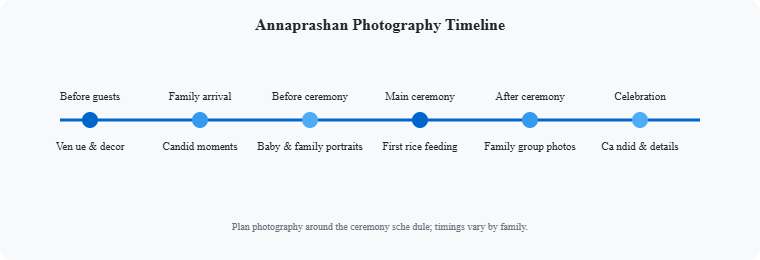
Figure 1: Annaprashan photography timeline — from venue shots before guests arrive to candid moments after the ceremony.
8 Creative Baby Rice Ceremony Photoshoot Ideas
These ideas are realistic, safe and adaptable to different budgets and venues. None of them require unsafe poses or props for babies. Each can be scaled up or down depending on the family's plans.
- Traditional Bengali look. Dress the baby in a tiny dhoti or sari with gold ornaments and a smal l mukut, and photograph against a backdrop of flowers, banana leaves and brass lamps. This suits families who want a classic, ceremonial feel.
- Minimalist baby portrait. A simple portrait of the baby against a plain, light background, focu sing on the face and hands. Works well for families who prefer a modern, uncluttered aesthetic and is easy to achiev e at home.
- Floral decoration setup. Use the ceremony's own floral decoration as the backdrop for baby port raits. Marigolds, roses and green leaves create colour and texture without extra cost.
- Traditional Bengali props. Brass bowls, banana leaves, small conch shells and traditional texti les add cultural context. Props should be placed near, not on, the baby, and never in a way that restricts movement.
- Parent and baby portraits. Quiet, intimate portraits of each parent with the baby, taken before the ceremony or during a calm moment. These often become the most treasured images.
- Grandparent and baby portraits. Formal and candid portraits of grandparents with the baby, idea lly taken early in the day when everyone is fresh and the baby is calm.
- Natural candid photography. Let the photographer observe and capture unposed moments: the baby reaching for rice, laughing at relatives, or being passed between arms. This requires patience but delivers the most authentic images.
- Detail photographs of the ceremony setup. Close-ups of the rice bowl, flowers, ornaments and at tire. These images give the final album an editorial quality and document the effort that went into the decoration.< /li>
Each idea can be adapted to different budgets. A home ceremony with natural light and minimal props can look as b eautiful as a decorated banquet hall, provided the photographer plans the angles and timing in advance. Families wit h larger budgets may add a short styled portrait session before the ceremony, but this should always be scheduled ar ound the baby's comfort.

Floral backdrops and traditional props add colour and context without extra cost.
How to Prepare Your Baby for an Annaprashan Photoshoot
A baby's comfort determines the quality of the photographs more than any camera or lens. First-time parents often underestimate how tired, hungry or overstimulated a baby can become during a ceremony with many guests. These pract ical steps help keep the baby happy and the shoot on track.
- Sleep schedule. Try to keep the baby's usual nap and sleep routine in the days before the cerem ony. A well-rested baby is calmer, more expressive and easier to photograph. Avoid late-night celebrations the eveni ng before.
- Feeding and comfort. Feed the baby at the usual time before guests arrive, and keep milk, water and a light snack available. Do not delay a feed to suit the photography schedule.
- Comfortable traditional clothing. Choose outfits that are soft, breathable and not too tight. T est the outfit on the baby a day before to check for irritation, and have a comfortable backup ready.
- Avoid unnecessary outfit changes. Each change can unsettle a baby. Plan one main outfit and at most one change, and keep both prepared and within reach.
- Keep essential baby items nearby. Wipes, diapers, a change of clothes, a favourite toy, a pacif ier and a light blanket should be in a bag close to the photography area. Quick access prevents small issues from be coming big delays.
- Plan photography around the baby's comfort. Schedule the most important shots, such as the trad itional portrait and the first rice feeding, during the baby's calmest window, usually mid-morning. Leave flexible t ime for breaks.
- Allow breaks when needed. If the baby becomes fussy, pause the photography. A short break for f eeding, holding or a nap often restores cooperation and leads to better images afterwards.
Practical tip: Assign one calm family member to be the baby's comfort person durin g the shoot, so parents can focus on guests and rituals while someone trusted keeps the baby settled.
Best Time to Capture Annaprashan Photographs
Planning photography around the ceremony schedule is more important than following a fixed timetable, because eve ry family's Annaprashan runs differently. The following order is a useful guide, but it should be adjusted to the fa mily's actual plan.
- Venue and decoration photographs before guests arrive. Capture the setup, flowers, ritual area and seating while the space is clean and undisturbed. This is usually the quietest and most productive window for th e photographer.
- Family portraits before the main ceremony. Photograph the baby, parents, grandparents and impor tant relatives while everyone is fresh, dressed and present. These portraits are easier to arrange before the ceremo ny begins.
- First rice feeding moment. This is the centrepiece. The photographer should be in position a fe w minutes early, with a clear view and no flash, so nothing is missed.
- Ritual and blessing photographs. Capture blessings, prayers, gift exchanges and any priest-led rituals as they happen, keeping the photographer unobtrusive.
- Candid moments after the ceremony. Once the formal part ends, the baby often relaxes and intera cts freely with relatives. This is the best window for candid expressions and behind-the-scenes images.
Do not treat these as rigid timings. A baby who needs a nap, a delayed priest or a late-arriving relative can shi ft the whole schedule. Share the actual ceremony plan with the photographer at least a week in advance so they can a dapt.
What Should Parents Discuss with Their Annaprashan Photographer?
A short planning conversation before the ceremony prevents most photography problems on the day. Parents should s hare the following details with the photographer.
- Ceremony date, time and venue, including whether it is at home or a banquet hall.
- Expected number of guests and the general flow of the event.
- Names and importance of key family members, especially grandparents and the maternal uncle who may perform the f eeding.
- The ritual schedule, including any priest-led prayers or special customs the family follows.
- Required group photographs, with a written list of the most important groups.
- Preference for traditional posed photography, candid photography, or a balance of both.
- Important moments that must not be missed, such as the first rice feeding or a specific blessing.
- Delivery expectations, including number of images, editing, album and timeline, based on the selected package.
Sharing the ceremony schedule beforehand helps the photographer plan positions, lighting and timing, and reduces the need to interrupt family members during the event. It also allows the photographer to suggest small adjustments, such as moving a portrait session to a better-lit spot, without disrupting the family's plans.
How to Choose the Right Rice Ceremony Photographer in Kolkata
Choosing a rice ceremony photographer Kolkata families can trust is about more than price. Babie s are unpredictable, venues vary widely and Bengali family gatherings have their own rhythm. The following criteria help parents make a confident decision.
- Previous baby and family event photography. Ask to see full Annaprashan or baby event galleries , not just highlight reels. A photographer who has worked with babies understands pacing, patience and safety.
- Experience with traditional Bengali ceremonies. Familiarity with rituals such as the first rice feeding, blessings and family groupings helps the photographer anticipate moments rather than react to them.
- Portfolio quality. Look for consistent exposure, natural skin tones, sharp focus on eyes, and a mix of wide, medium and close-up frames.
- Ability to capture candid emotions. The best Annaprashan albums balance formal portraits with g enuine expressions. Check whether the photographer's candid work feels natural or staged.
- Lighting and venue experience. Kolkata homes and halls have mixed lighting. Ask how the photogr apher handles low light, small rooms and crowded spaces.
- Communication and planning. A good photographer asks questions, shares a plan and responds prom ptly. Poor communication before the event usually means poor coordination on the day.
- Clear package and delivery information. Understand what is included: hours of coverage, number of photographers, edited images, album, delivery timeline and any travel charges. Avoid vague promises.
Parents should request at least two or three written quotes, compare scope rather than price alone, and confirm b ooking terms in writing. The Birds Eye's dedicated Annaprashan photography packages provide a clear starting point, with coverage starting from ₹30,000 and options up to two days of coverage.
Annaprashan Photography Checklist for Parents
Use this checklist in the week before the ceremony to make sure nothing is overlooked.
- Confirm the photographer and finalise the package in writing.
- Share the ceremony schedule, venue details and guest count.
- Prepare the baby's outfits and a comfortable backup.
- Identify important family members and assign someone to help gather groups.
- Prepare a written list of required group photographs.
- Discuss important rituals and any family-specific customs with the photographer.
- Arrange a comfortable, well-lit space for the baby's portraits.
- Confirm venue photography arrangements, including any restrictions on flash or tripods.
- Pack a baby bag with wipes, diapers, milk, toys, a pacifier and a change of clothes.
- Plan the baby's sleep and feeding around the ceremony time.
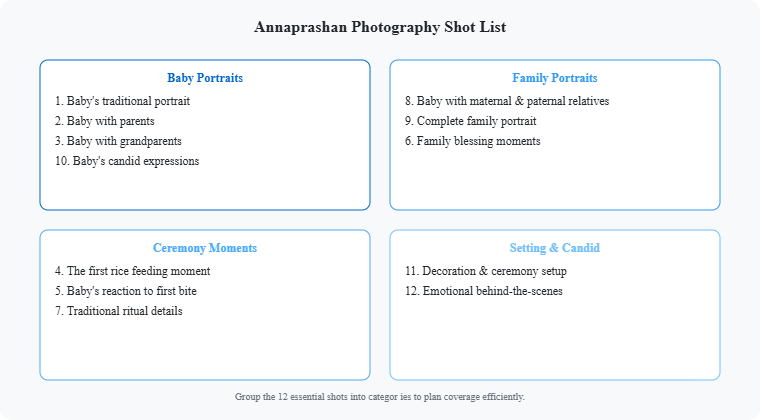
Figure 2: Annaprashan photography shot list infographic — grouped into baby portraits, family portraits, ceremony moments and setting.
Frequently Asked Questions About Annaprashan Photography
How much does Annaprashan photography cost in Kolkata?
Pricing depends on the selected package and event requirements. The Birds Eye's Annaprashan packages start from ₹ 30,000 for a single-day package with one photographer and one cinematographer, with higher tiers offering additional photographers, cinematographers, drone coverage and a longer album. For confirmed pricing and inclusions, contact T he Birds Eye directly.
When should I book an Annaprashan photographer?
It is best to book at least four to six weeks before the ceremony, and earlier during peak wedding season in Kolk ata when photographers are heavily booked. Early booking also leaves time to plan outfits, the ceremony schedule and family group shots.
How many photographs should I expect from a rice ceremony?
The number depends on the selected package and coverage duration. The Birds Eye's Annaprashan packages typically include 500 to 1000 or more raw high-resolution images, along with edited soft copies and a printed photobook, depen ding on the tier chosen.
What are the must-have photographs during Annaprashan?
The twelve must-have photographs are the baby's traditional portrait, baby with parents, baby with grandparents, the first rice feeding moment, the baby's reaction to the first bite, family blessing moments, traditional ritual de tails, baby with maternal and paternal relatives, the complete family portrait, candid baby expressions, decoration and ceremony setup, and emotional behind-the-scenes moments.
Can we arrange a separate baby photoshoot during Annaprashan?
Yes. Many families add a short traditional baby portrait session before or after the ceremony. It works best when the baby is well rested and comfortable, and when the outfit and decoration are already in place. Keep it short to avoid tiring the baby.
How should I prepare my baby for the photoshoot?
Plan around the baby's sleep and feeding schedule, choose comfortable traditional clothing, avoid too many outfit changes, and keep essentials such as wipes, milk, toys and a change of clothes nearby. Allow breaks whenever the ba by needs rest, and assign a calm family member to keep the baby settled.
Should I choose candid or traditional photography?
A balanced combination works best. Traditional posed photographs preserve formal family portraits and ritual deta ils, while candid photographs capture the baby's real expressions, laughter and emotional family moments. Discuss yo ur preference with the photographer before the ceremony so coverage can be planned accordingly.
How long does Annaprashan photography usually take?
Most Annaprashan photography coverage fits within a single day, from decoration and setup shots before guests arr ive through the ceremony and family portraits afterwards. The exact duration depends on the family's schedule and th e selected package.
Preserve Your Baby's First Rice Ceremony with The Birds Eye
Annaprashan happens only once. The baby's first taste of rice, the grandparents' blessings, the laughter of relat ives and the quiet pride of parents are moments that cannot be recreated. A thoughtful photography plan ensures thos e moments are preserved with the care they deserve, for the family to revisit for years to come.
The Birds Eye is a photography studio based in Kolkata, serving families across the city and surrounding areas. T he studio offers dedicated Annaprashan and Mukhe Bhaat photography packages with clear inclusions, experienced photo graphers familiar with Bengali family ceremonies, and coverage designed around the baby's comfort. You can explore t he Annaprashan photography packages, browse the Annaprashan photo gallery, read the Bengali wedding photography guide for broader context, or learn more about the studio.
Planning your baby's Annaprashan ceremony in Kolkata?
Get in touch with The Birds Eye to discuss your photography requirements and preserve these special family moment s.
Contact The Birds Eye · View Annaprashan Packages · Call 8100280787 or 8 617711900 · Email info@thebirdseye.in
More reading from The Birds Eye: Wedding Photography Cost in Kolkata, 15 Best Pre-Wedding Photoshoot Locations , Ca ndid Wedding Photography Poses, Best Wedding Photographer in Kolkata, and all blog posts.
The Birds Eye — Wedding & Event Photography Studio, Kolkata. A-173 Survey Park, Santoshpur, Kolkata 700075. Phone: 8100280787, 8617711900. Email: info@thebirdseye.in. WhatsApp: wa.me/91810 0280787. Book Now · Terms.